



- Regular price
- £45.95
- Regular price
-
- Sale price
- £45.95
- Unit price
- per
- Regular price
- £47.95
- Regular price
-
£53.95 - Sale price
- £47.95
- Unit price
- per

- Regular price
- £39.95
- Regular price
-
- Sale price
- £39.95
- Unit price
- per
- Regular price
- £47.95
- Regular price
-
£53.95 - Sale price
- £47.95
- Unit price
- per

- Regular price
- £41.95
- Regular price
-
- Sale price
- £41.95
- Unit price
- per


- Regular price
- £35.95
- Regular price
-
- Sale price
- £35.95
- Unit price
- per
Mezcal: The Ancient Spirit of Oaxaca – A Journey Through Mexico's Most

For centuries, the mountains and valleys of Oaxaca, Mexico, have produced one of the world's most fascinating spirits—mezcal. More than simply an alcoholic drink, mezcal represents history, family, craftsmanship, nature, and culture. Every bottle tells a story that begins years before the first sip, with agave plants slowly maturing under the Mexican sun.
Today, mezcal has become one of the fastest-growing premium spirits worldwide, appreciated by bartenders, collectors, and whisky lovers alike for its remarkable complexity. Yet despite its growing popularity, true mezcal remains deeply connected to the traditions of Oaxaca, where generations of mezcaleros continue to produce it using methods that have changed very little over hundreds of years.
What is Mezcal?
Mezcal is a distilled spirit made from the heart of the agave plant, known as the piña because of its resemblance to a pineapple once harvested.
Unlike tequila, which must be produced exclusively from Blue Weber agave, mezcal can legally be made from more than 40 different varieties of agave. This incredible diversity gives mezcal one of the broadest flavour spectrums of any spirit in the world.
Each agave species develops differently depending on:
- Climate
- Altitude
- Rainfall
- Soil composition
- Age at harvest
- Local production techniques
These natural differences create unique flavour profiles that can range from floral and citrusy to earthy, smoky, herbal, mineral, spicy, or even tropical.
No two authentic mezcals taste exactly alike.

When people think of mezcal, they think of Oaxaca.
Located in southern Mexico, Oaxaca produces around 90% of all certified mezcal, making it the undisputed home of this remarkable spirit.
The region offers perfect growing conditions for agave:
- Rich volcanic soil
- High mountain ranges
- Dry subtropical climate
- Diverse ecosystems
- Hundreds of years of family traditions
Many villages throughout Oaxaca have specialised in mezcal production for generations. Families pass recipes, fermentation methods and distillation techniques from parents to children, preserving a craft that forms part of the region's identity.
One of the best-known towns is Santiago Matatlán, often called the World Capital of Mezcal, where nearly every family has some connection to agave cultivation or mezcal production.
The History of Mezcal
Long before Europeans arrived in Mexico, indigenous peoples had been using agave for food, fibre, medicine and ceremonial purposes.
When Spanish distillation techniques arrived in the 16th century, local communities began transforming roasted agave into distilled spirits. Over time, each region developed its own style of mezcal production.
Unlike many modern spirits, mezcal has remained largely artisanal.
Even today, thousands of small family producers continue to make mezcal using traditional methods passed down through generations rather than industrial manufacturing processes.
The Agave Plant – Nature's Masterpiece
One reason mezcal is so special is the extraordinary patience required to produce it.
Depending on the species, an agave plant may need between 8 and 30 years before it is mature enough to harvest.
Unlike grapes or grain, agave flowers only once during its lifetime. If left untouched, the plant sends up a towering flowering stalk before naturally dying.
For mezcal production, experienced jimadores harvest the plant just before flowering, when the highest concentration of natural sugars has developed inside the piña.
This long growing period explains why many rare mezcals are produced only in very small quantities.

Authentic mezcal remains one of the world's most handcrafted spirits.
Harvesting
The sharp leaves are removed by skilled workers called jimadores, leaving only the large heart of the agave.
Underground Roasting
The piñas are placed inside large underground pits lined with volcanic rocks and covered with earth. Over several days, slow roasting caramelises the natural sugars while creating mezcal's famous smoky aroma. This ancient cooking method is one of the defining characteristics of traditional mezcal.
Crushing
After roasting, the softened agave is crushed using a huge circular volcanic stone known as a tahona, traditionally pulled by a horse or mule. Some small producers still use entirely manual methods.
Natural Fermentation
Unlike industrial spirits that rely on laboratory yeast, many mezcal producers allow wild yeasts naturally present in the environment to ferment the agave. This spontaneous fermentation gives every batch its own personality and reflects the local environment.
Distillation
Most artisanal mezcal is distilled twice in small copper or clay stills. Rather than aiming for complete uniformity, mezcaleros embrace subtle variations that make each batch unique.
Why Does Mezcal Taste Smoky?
One of the most common questions from newcomers is why mezcal has a smoky flavour.
The answer lies in the underground roasting process.
As the agave slowly cooks over heated volcanic rocks beneath layers of earth, natural wood smoke penetrates the plant, producing flavours that range from gentle campfire notes to rich roasted sweetness.
Not every mezcal is intensely smoky.
Many premium mezcals display elegant flavours of citrus, herbs, flowers, minerals and tropical fruit, with smoke acting as a subtle background rather than the dominant note.
The Incredible Diversity of Agave
One of mezcal's greatest attractions is the enormous variety of agave species.
Some of the most celebrated include:
- Espadín – Fruity, approachable and the most widely cultivated.
- Tobalá – Often floral, creamy and highly aromatic.
- Tepeztate – Wild, herbal and extremely complex.
- Cuishe – Mineral, peppery and earthy.
- Madrecuixe – Elegant with herbal freshness.
- Arroqueño – Rich, sweet and beautifully balanced.
Each variety reflects its environment in much the same way that grape varieties express different wine regions.
Mezcal and Oaxacan Culture
In Oaxaca, mezcal is woven into everyday life.
It is shared during weddings, birthdays, religious celebrations, harvest festivals and family gatherings. Visitors are often welcomed with a small glass of mezcal as a gesture of hospitality and friendship.
There is a popular saying throughout Oaxaca:
"Para todo mal, mezcal; para todo bien, también."
It translates roughly as:
"For everything bad, mezcal. For everything good, as well."
While humorous, the saying captures the spirit of mezcal as a drink meant to bring people together during life's most important moments.
Sustainability and Respect for Agave
As mezcal grows in popularity around the world, responsible production has become increasingly important.
Many traditional producers are committed to:
- Replanting agave after every harvest
- Protecting wild agave populations
- Supporting local farming communities
- Preserving biodiversity
- Maintaining traditional production methods
These practices help ensure future generations can continue producing authentic mezcal without harming the environment.
How to Drink Mezcal
Unlike many spirits designed primarily for mixing, premium mezcal is traditionally enjoyed slowly.
Experts recommend:
- Serving at room temperature
- Using a small tasting glass or traditional clay copita
- Smelling the aromas before drinking
- Taking small sips
- Allowing the flavours to develop gradually
Mezcal also pairs wonderfully with:
- Dark chocolate
- Aged cheeses
- Grilled meats
- Seafood
- Citrus fruits
- Traditional Mexican cuisine
Mezcal vs Tequila
Although both are made from agave, they are very different spirits.
| Mezcal | Tequila |
|---|---|
| Produced from many agave species | Produced only from Blue Weber agave |
| Underground pit-roasted | Usually steamed in industrial ovens |
| Rich smoky complexity | Cleaner cooked agave profile |
| Primarily handcrafted | Often produced on an industrial scale |
| Strong regional identity | Concentrated mainly in Jalisco |

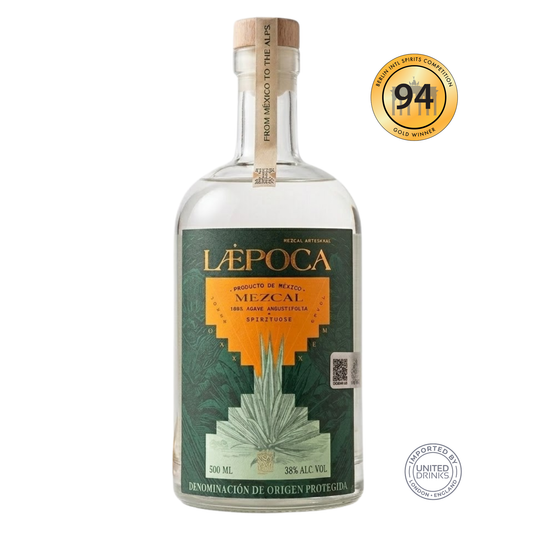
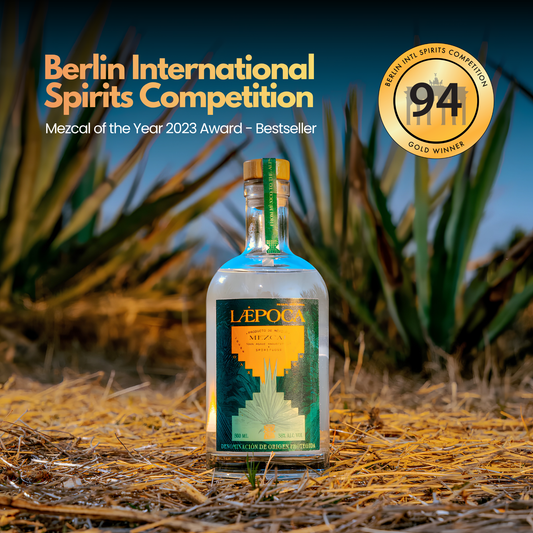
Among the new generation of premium mezcal producers, LÆPOCA Mezcal stands out for its commitment to preserving Oaxaca's traditional methods while introducing authentic artisanal mezcal to a wider audience.
Working alongside experienced mezcaleros in Oaxaca, LÆPOCA focuses on small-batch production, carefully selected agaves, and craftsmanship rather than mass production. Its collection—including Espadín, Ensamble, and Cuishe expressions—celebrates the diversity of Oaxaca's landscapes and agave varieties, allowing drinkers to experience the true character of Mexico's most iconic spirit.
Rather than changing centuries-old traditions, LÆPOCA seeks to share them with the world—one bottle at a time.
Mezcal is far more than a distilled spirit. It is the result of patience, tradition, family knowledge, and a profound respect for nature. Every bottle represents years of agave growth, generations of craftsmanship, and the unique landscapes of Oaxaca.
Whether you are exploring mezcal for the first time or expanding your appreciation of premium agave spirits, understanding its history and culture makes every sip even more meaningful.
The next time you enjoy a glass of authentic mezcal, remember that you are tasting not only one of Mexico's oldest spirits but also the living heritage of Oaxaca itself.